
Rethinking Water Management on the Dairy
April 17, 2026
Why Your Milk Tank Isn’t Moving: Finding the Missing Piece
March 20, 2026
Why Consistency Matters
On a dairy, milking may be a routine task, but it’s far from simple. The way each cow is prepped before milking has a direct impact on udder health, milk quality, and parlor efficiency.
Yet in many operations, no two milkers prep cows the exact same way. And while those differences might seem small — an extra wipe here, less stimulation there, longer or shorter prep-lag times — over hundreds of cows and multiple shifts a day, those inconsistencies add up.
The Problem With Variability
When prep routines vary between milkers, so do your results. Here’s what can happen:
• Inconsistent Milk Letdown – Some cows receive proper stimulation, while others don’t, leading to bimodal letdowns and reduced yield.
• Higher Mastitis Risk – If teats aren’t cleaned thoroughly every time, bacteria can bypass the liner.
• Unpredictable Parlor Flow – One shift finishes early, another runs behind — making scheduling harder, reducing labor efficiency, and creating inconsistent milk output.
It’s not that milker technicians don’t care — it’s that without standardized tools and training, even experienced workers develop their own variations in technique.
How the Teat Scrubber Helps Standardize Prep
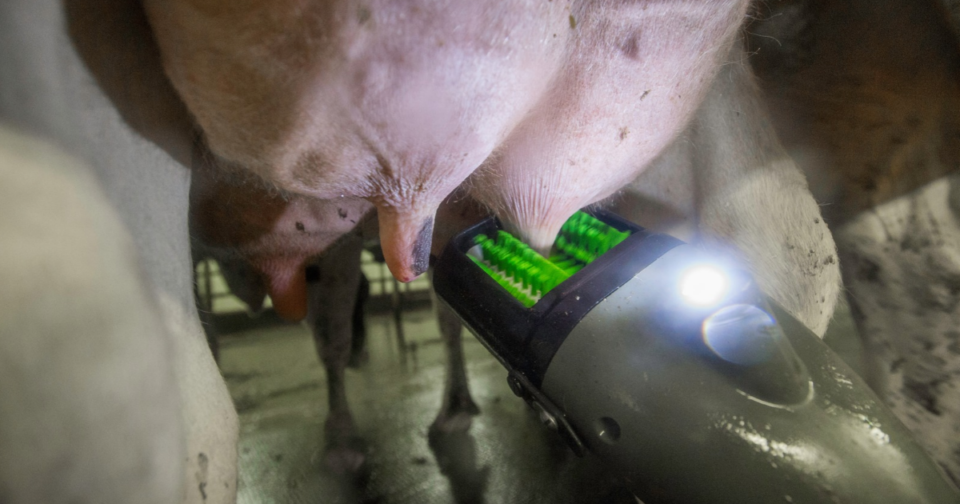
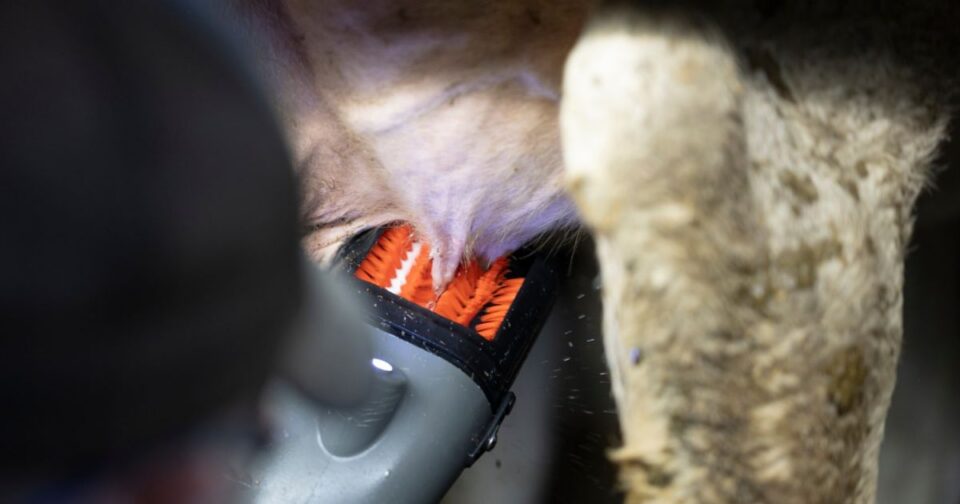
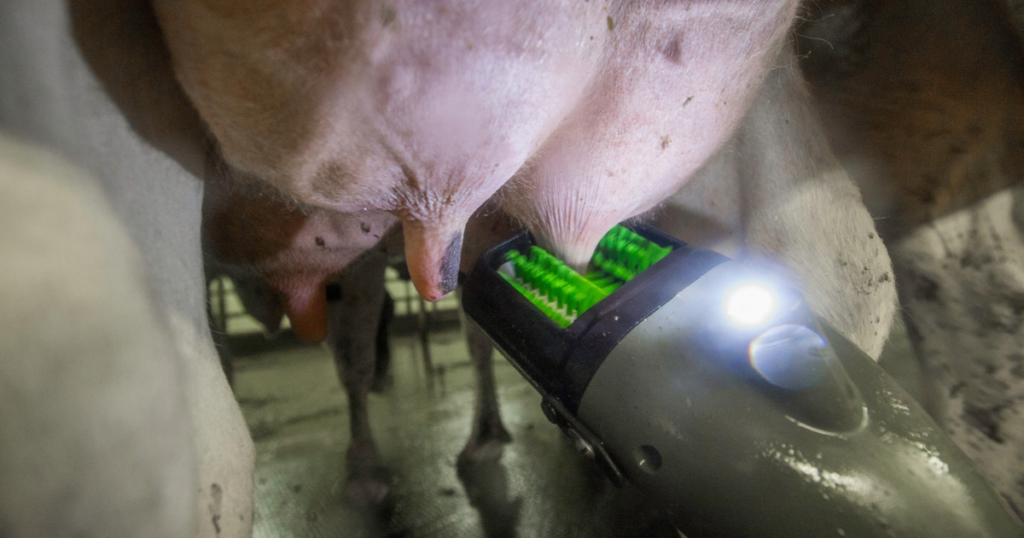
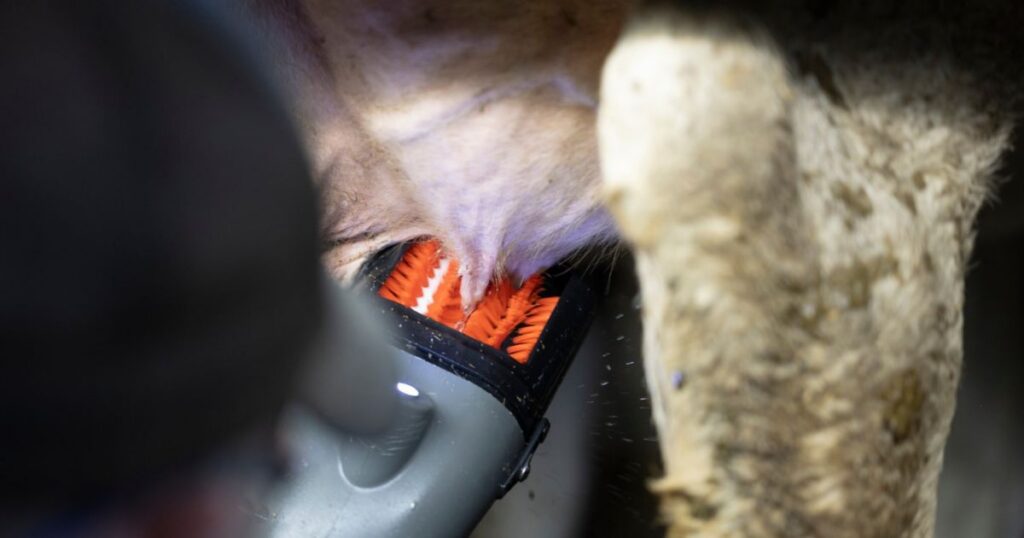
FutureCow’s Teat Scrubber was designed with one key principle in mind: consistency in every stall, for every cow — regardless of who’s holding the handle.
By reducing variability in prep, it eliminates many of the inconsistencies cows experience from shift to shift.
Here’s how it helps:
• One Motion = Four Steps – Disinfects, stimulates, and dries in a single, consistent process.
• Built-In Contact Time – Brushes stay on the teat long enough for effective cleaning and stimulation — removing guesswork.
• Uniform Pressure & Coverage – The brush design ensures every teat receives the same treatment, every time. The same sensation helps deliver consistency cows can expect.
This means whether it’s a new hire or a seasoned milker on shift, cows receive the same prep quality every time.
Real-World Example
On one dairy, management noticed SCC spikes during certain times of the week. After closer observation, the difference wasn’t in the cows — it was in the milking prep.
After implementing the Teat Scrubber and standardizing training:
• Prep-lag times became consistent at 90–120 seconds
• SCC dropped by 20% within two months
• Parlor throughput became more consistent across all shifts
The key wasn’t just adding a tool — it was removing the human variability in how the task was performed
Why This Matters More Than Ever
Labor turnover is a reality in the dairy industry — and it’s not slowing down.
Training new milkers takes time, and every staffing change introduces the risk of inconsistency. By giving every milker technician the same starting point — a standardized process built into the equipment itself — you protect milk quality, cow health, and parlor efficiency no matter who’s on shift.
Because in the end, it’s not just about milking faster.
It’s about milking better — every cow, every time.