
It’s Not Just Prep — It’s Physiology: What Real Teat Stimulation Does to Milk Flow
February 20, 2026
Every Cow, Every Time: Why Consistency Matters
April 2, 2026
Every dairy producer has experienced the same frustration.
You make an improvement — adjust the ration, add fans, improve stall bedding, or fine-tune the milking routine — and the milk tank barely moves. Maybe production increases a pound or two. Sometimes nothing seems to change at all.
That experience often leads to the same question:
Why didn’t this make a bigger difference?
The answer often comes down to a simple but important reality: milk production is never controlled by just one factor. Instead, it is the result of many management systems working together. When one system becomes a limiting factor, it can restrict the performance of all the others.
Researchers and educators have explored the concept of potential milk for years, using tools like stocking density calculators or ration models. For example, the Miner Agricultural Research Institute has developed a time budget calculator that illustrates how different stocking densities influence overall milk production potential.
While the exact impact of each factor varies from farm to farm, the key idea is this: milk production is a system. It is shaped by how all the pieces — nutrition, cow comfort, health, milking routines, environment, and management — interact, rather than by each component in isolation.
Understanding this concept, what we might call Weighted Production Potential, can help producers identify the true limiting factors that are holding back herd performance.
Milk Production Is a System
Many aspects of dairy management influence how much milk cows ultimately produce. These typically include:
• Nutrition and feed management
• Cow comfort and housing
• Herd health and transition management
• Milking routines and udder health
• Environment and heat stress management
• Cow movement and handling
• Genetics
• Calf and heifer programs
Each of these areas plays a role in determining how efficiently cows convert feed and nutrients into milk.
But these factors do not operate independently. Instead, they constantly interact with each other. When one area begins to limit the system, it reduces the impact of improvements made elsewhere.
Nutrition: The Foundation of Production
Nutrition is often the first place we look when trying to increase milk production.
High-quality, digestible forage and balanced rations provide the energy, protein, fiber, minerals, and vitamins cows need to support high levels of production. Feed quality, consistent mixing, and good bunk management all influence how effectively cows consume and utilize nutrients.
However, even the best ration cannot overcome limitations in other parts of the system.
A dairy may have excellent feed formulation on paper, but if cows are overheated, uncomfortable, or stressed, they cannot convert that nutrition into milk as efficiently as they should.
Nutrition establishes the potential for production — but other management areas determine how much of that potential is actually realized.
Cow Comfort: Allowing the Cow to Perform
Cow comfort plays a major role in how efficiently cows produce milk. It influences how much time cows spend lying down, ruminating, and resting. High-producing cows typically lie down for many hours each day, supporting proper rumination and blood flow to the udder.
When cows are forced to stand longer due to overcrowding, poorly designed stalls, or extended holding times, rumination often decreases — and milk production can follow.
Important comfort factors include:
• Stall design and bedding quality
• Stocking density
• Ventilation and cooling systems
• Time spent resting versus standing
Comfort doesn’t directly create milk, but it allows the cow’s physiology to function at its best.
Cow Health and the Transition Period
Health challenges can quietly limit milk production across an entire herd.
Transition disorders, metabolic challenges, lameness, and other health events often reduce production — even when they are not immediately obvious.
The transition period is especially critical. Cows that struggle during the weeks surrounding calving often never fully reach their production potential during that lactation. Strong transition management and proactive herd health programs help protect the cow’s ability to maintain high levels of production.
Milking Routines and Udder Health
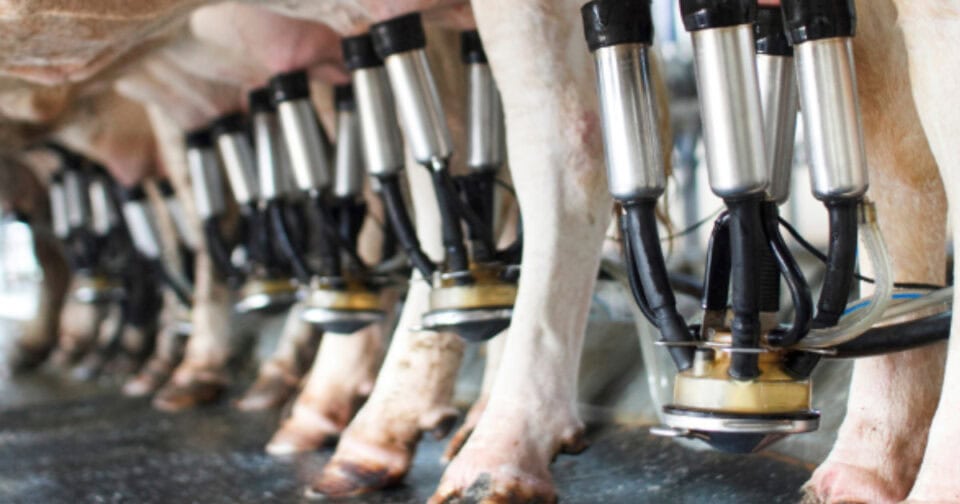
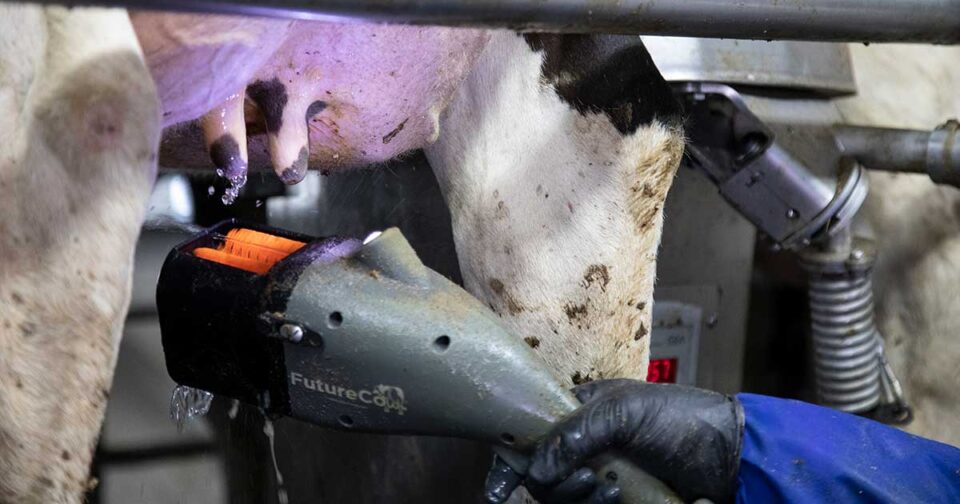
Milking procedures influence milk production more than many people realize. Consistent routines — from milker to milker and shift to shift — help ensure proper milk letdown, efficient milk removal, and good udder health.
When milking preparation is rushed or inconsistent, cows may not fully let down their milk. Over time, incomplete milk-out or udder irritation can gradually reduce herd production.
Calm, consistent milking routines allow cows to express their full production potential while protecting udder health.
Environment and Heat Stress
Environmental conditions can significantly affect milk yield. Heat stress is one of the most well-known examples.
When cows experience elevated temperatures and humidity, feed intake often decreases while energy demands increase. The result is lower milk production, along with impacts on reproduction and overall health.
Ventilation, fans, sprinklers, and shade all play important roles in maintaining production during periods of heat stress. Even moderate environmental stress can reduce how efficiently cows convert feed into milk.
Cow Flow and Handling
Cow movement and handling practices also influence production.
Cows that are pushed aggressively, overcrowded in holding areas, or stressed while moving to the parlor may experience disrupted milk letdown. Calm cow flow, on the other hand, supports smoother milking routines and more consistent production.
Facility design, crowd gate management, and patient stockmanship all contribute to how comfortably cows move through the milking process.
Genetics: The Starting Point
Genetics establish the biological potential for milk production, but genetics alone do not determine how much milk ends up in the tank.
Modern dairy cattle already possess tremendous genetic capability. The greater challenge for most farms is creating an environment where cows can fully express that potential.
In many herds, the gap between genetic potential and actual production is largely determined by management.
Calf and Heifer Management: Building Future Production
Milk production starts long before cows enter the parlor. Proper calf and heifer management lays the foundation for future performance.
Early nutrition, colostrum management, disease prevention, and growth rates all influence how heifers develop and perform in their first lactation. Proper growth targets, balanced feed, and good housing help ensure animals reach breeding size and maturity without limiting future productivity.
Strong calf and heifer programs are an investment in the future milk production of the herd.
Finding the Limiting Factor
One of the most valuable lessons from the weighted potential concept is that milk production is often limited by the weakest part of the system.
A dairy may have excellent genetics and a well-balanced ration, but if cows are overcrowded, overheated, or uncomfortable, overall production will still suffer.
This is why improvements in a single area sometimes produce disappointing results. If another factor remains limiting, the herd cannot fully respond.
Identifying and improving the true limiting factor is often the key to unlocking additional milk production.
Small Improvements Add Up
The encouraging part of this concept is that improvements in multiple areas often build on each other.
Each improvement may only contribute a small gain on its own, but together they can create meaningful increases in milk production.
Milk production is rarely about finding one magic solution. It comes from building a management system where nutrition, comfort, health, environment, and milking practices all work together.
When those pieces align, performance follows — and the results show up exactly where every dairy producer wants to see them: in the bulk tank.