Every Cow, Every Time: Why Consistency Matters
April 2, 2026
Over the past week here in Northeast Wisconsin, water has been impossible to ignore. Fields have been overly saturated. Low spots have turned into ponds. Tile lines are running full — and in some cases, overwhelmed. Water has even risen to the point of running over roads.
These recent rain events have pushed us into 100-year record territory, reminding not just those of us in agriculture, but also urban communities, how quickly water can shift from being a resource to a challenge.
Here in the Upper Midwest, we are fortunate to have some of the most beautiful natural resources. But with that comes the challenge of managing excess water.
So the question becomes: How do we handle it? And how do we do so in a way that protects our environment and groundwater?
That question matters more today than ever.
The Other Side of the Coin
Travel across the country and you’ll see a completely different reality — water isn’t abundant. It’s limited. Managed tightly. Protected carefully.
In those regions, conservation is driven by necessity. Every gallon has value because there simply isn’t enough to go around.
Back here in the Upper Midwest, water conservation can sometimes feel less urgent. When it rains — and rains hard — it’s easy to assume we have more than enough.
But that thinking misses the bigger picture.
Too much water still requires management. Excess water does not mean unlimited water. Heavy rainfall increases risk. Nutrients move. Soil moves. What doesn’t infiltrate properly leaves the farm — often taking valuable resources with it and increasing input costs.
Managing water in this region isn’t about scarcity.
It’s about stewardship.
It’s about:
- Reducing unnecessary water use
- Eliminating waste
- Protecting groundwater
- Being intentional with daily water use
And that last point is where small, consistent decisions begin to matter.
Looking Inside the Parlor
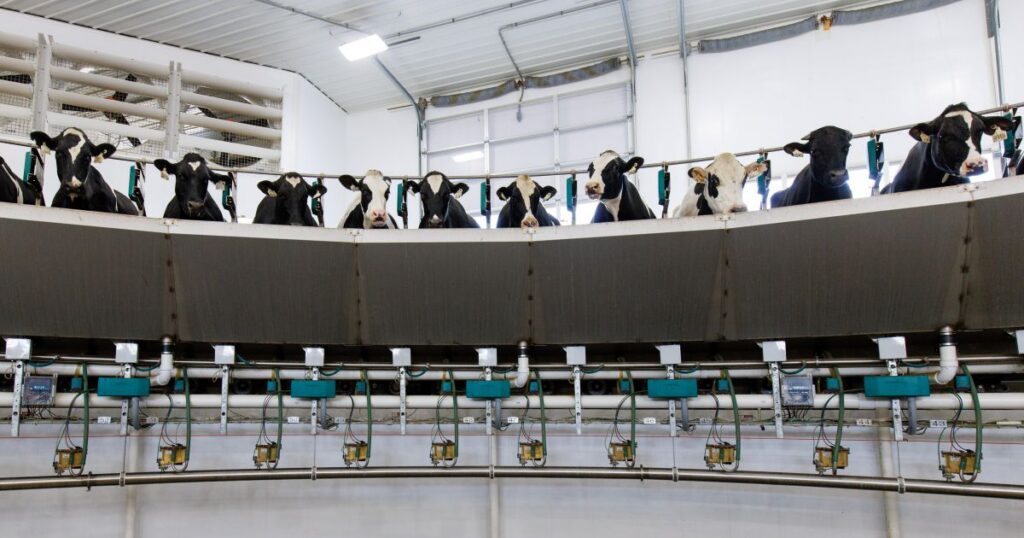
When we think about water use on a dairy, we often focus on large systems — washing equipment, cooling milk, or flushing manure systems.
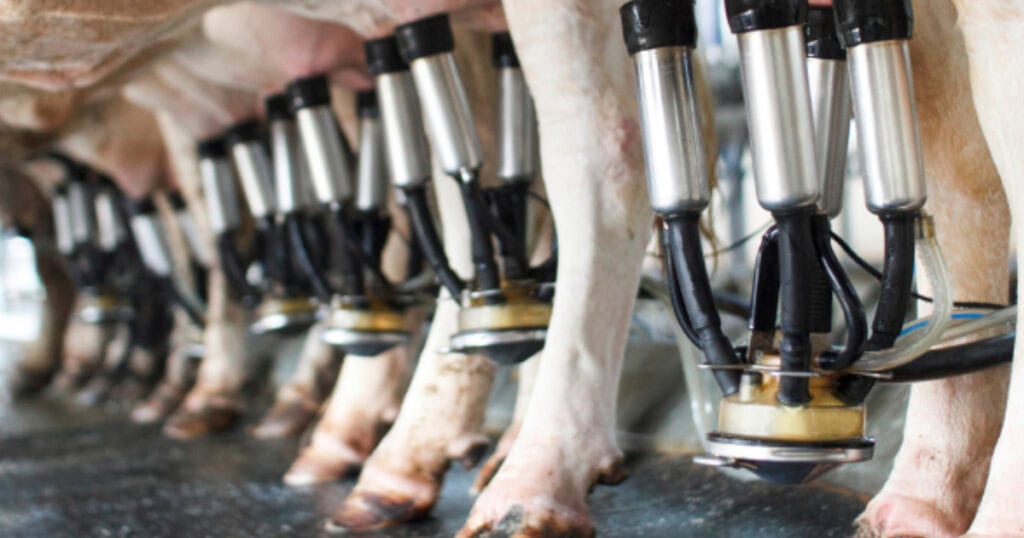
But water is also used in the milking routine itself.
Traditional towel systems, especially reusable cloth towels, require:
- Significant water for washing
- Energy for heating and drying
- Chemicals for sanitation
- Labor for handling and processing
These systems carry a hidden water footprint that often goes unmeasured.
Our Contribution
The teat scrubber was designed first and foremost around cow cleanliness and consistency. But one of the outcomes of that design is a meaningful reduction in water use.
Instead of relying on bulk water for washing towels, the system uses a targeted and controlled application of solution. For a 500-cow dairy milking three times per day, that’s approximately 32 gallons of water per day for prep — a fraction of what conventional systems require.
Why That Matters Here
In a region dealing with excess water, reducing usage might not seem like a priority at first glance — but it is just as important as it is in water-scarce areas.
Because every gallon that doesn’t need to be handled, documented, treated, or discharged is a gallon that:
- Doesn’t contribute to system load during heavy rain events
- Doesn’t add to runoff risk
- Doesn’t require additional energy or infrastructure to manage
This isn’t about reacting to drought.
It’s about building systems that are efficient in any condition.
A Broader Perspective
Across the U.S., water challenges vary:
- The Upper Midwest manages excess water and runoff risk
- The Plains and Western regions manage scarcity and allocation
- Urban areas focus on treatment and reuse
Globally, the contrast is even sharper.
What becomes clear is this:
There is no single water story — but there is a shared responsibility.
Small Changes, Bigger Impact
Water conservation doesn’t always come from sweeping changes. Often, it comes from rethinking everyday processes:
- How we prep cows
- How we clean equipment
- How we manage manure
The teat scrubber is one example of how a routine task — done multiple times per day — can be refined to use less while still performing at a high level.
Not as a silver bullet.
Not as a replacement for broader conservation practices.
But as part of a larger mindset shift toward efficiency and stewardship.
Moving Forward
Back here in Wisconsin, the rain will stop eventually. Fields will dry. Crops will recover.
But the conversation around water shouldn’t stop with the weather.
Whether we’re dealing with too much or not enough, the goal remains the same:
Use it wisely. Protect it intentionally. Leave it better than we found it.
Because at the end of the day, the same water we manage today is the water our cows, our farms, and our families depend on tomorrow.