Start Your Prep Routine Before Cows Enter the Parlor
June 12, 2026
We Don’t Have a Labor Problem — We Have a Training Problem
May 1, 2026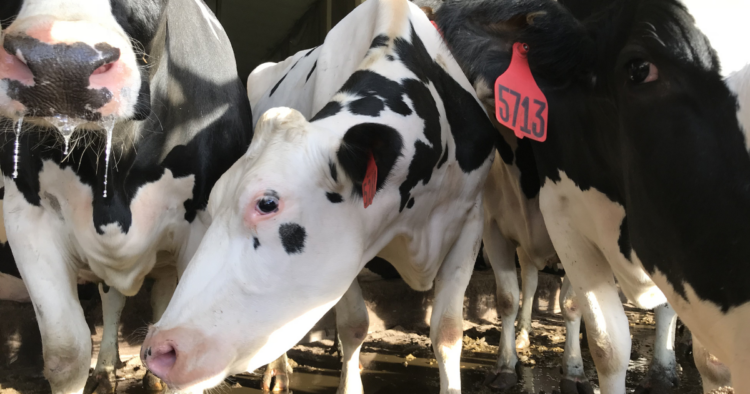
Recently, Taylor Leach wrote an article for Dairy Herd Management titled “Fly control begins before summer pressure peaks.” It was a good reminder that if we wait until flies are already everywhere, we are already behind.
Her article focused on getting ahead of fly populations before summer pressure peaks, and it got me thinking about how often we treat flies on dairies as just an annoyance instead of what they really are: a management issue that quietly impacts milk quality, cow comfort, calf health, employee experience, and ultimately profitability.
Read Taylors article here; Fly Control Begins Before Summer Pressure Peaks – Dairy Herd
On most dairies, flies are simply accepted as part of summer. We expect cows to swish tails, stomp feet, bunch together, and throw their heads around. Employees expect to deal with them in the parlor, calf barn, and even the breakroom. At some point, we started treating flies as “normal.”
But maybe we have gotten too comfortable with that mindset.
The reality is that high fly pressure changes cow behavior. Comfortable cows lie down, ruminate, eat, and rest. Stressed cows spend more time standing, bunching together, and fighting irritation instead of doing what cows are supposed to do.
During periods of heat stress, that problem becomes even worse. We have all seen cows crowd together trying to avoid biting flies, often standing in areas with poor airflow and even more stress. What starts as a fly issue quickly becomes a cow comfort issue.
And in dairy farming, cow comfort affects nearly everything.
Milk production, reproductive performance, immune function, transition success, and overall consistency all improve when cows are comfortable. We spend tremendous time and money discussing bedding, ventilation, fans, sprinklers, and stall design — and rightfully so — but fly control deserves to be part of that cow comfort conversation too.
Fly Control and Milk Quality
Where this conversation becomes even more important is milk quality.
At FutureCow, we spend a lot of time helping dairies work through mastitis challenges, milk quality frustrations, and management consistency. When producers think about mastitis prevention, the conversation usually focuses on prep procedures, towels, gloves, milking equipment, vacuum levels, post-dip coverage, or employee consistency.
Those are all critical discussions.
But one question often gets overlooked:
What role are flies playing in the overall disease pressure on this dairy?
Think about where flies spend their day.
One minute they are on manure. The next they are in wet bedding, spoiled feed, calf manure, or an infected quarter. Minutes later, they are landing directly on teat ends.
Flies are mechanical movers of bacteria. They may not be the root cause of every mastitis issue, but they absolutely contribute to bacterial movement throughout the dairy environment. When fly pressure becomes severe, it is hard to ignore the role they may play in both environmental and contagious mastitis challenges.
We often think of contagious mastitis as something spread primarily during milking through infected units, towels, gloves, or inconsistent prep procedures — and that is true. But what happens outside the parlor matters too.
When flies repeatedly move between infected udders, manure, milk residue, and healthy cows, they increase overall disease pressure within the environment. If a dairy is battling elevated SCC or struggling to gain traction on mastitis control, severe fly pressure deserves to be part of the conversation.
The Heifer Conversation We Often Miss
What concerns me even more is the part of this discussion we often do not talk about enough: heifers.
Many dairies assume mastitis begins once a heifer calves in, but we know that is not always true. First-lactation animals can freshen with infections already present, meaning the story often started months before calving.
Flies are naturally attracted to warm, moist areas, and during summer months bred heifers can experience tremendous fly pressure around developing udders. If we are serious about setting heifers up for long-term success, fly control in heifer facilities deserves far more attention than it often receives.
Too many times we see elevated SCC in fresh heifers and chalk it up to bad luck, when in reality the groundwork may have been laid long before they entered the milking herd.
And honestly, this conversation probably starts even earlier than that.
It Starts With Calves
If calf facilities become breeding grounds for flies, we are already playing defense before calves ever have a chance to become healthy, productive cows.
Wet bedding, spilled milk, manure buildup, leftover grain, and poor airflow create an environment flies absolutely love. Beyond irritation, flies can mechanically move pathogens that contribute to calf health challenges, particularly digestive disease pressure.
This is where prevention becomes far more important than reaction.
One thing I appreciated about Taylor Leach’s article was the emphasis on getting ahead of fly pressure instead of chasing it. That same mindset applies throughout the dairy. By the time cows are covered in flies and employees are frustrated, the problem has already matured.
Prevention Starts With Cleanliness
Good fly control usually starts with cleanliness.
I know that answer is not exciting. It would be easier if there were one magic product, one spray, or one solution that solved everything. But like most things in dairy farming, the basics matter more than people want to admit.
Clean alleys, dry bedding, feed management, waterer maintenance, calf pen cleanliness, and eliminating standing moisture all matter. Flies thrive in moisture and decaying organic material. If breeding areas multiply, we are already behind before chemistry ever enters the picture.
I have always believed you cannot chemically treat your way out of poor sanitation.
Chemistry absolutely has value, but it works best when the foundation is already strong.
Something else dairies occasionally overlook is what happens outside the barn itself. Manure pits, lagoon edges, overgrown vegetation, damp areas around barns, and neglected corners can all contribute to fly pressure. Sometimes the source of the problem is sitting just outside the wall.
Layering Strategies Together
Premise spraying can play an important role in controlling flies around barns, vegetation, fence lines, shaded resting areas, and other non-animal-contact surfaces. The advantage of residual chemistry is that flies do not need to be sprayed directly. Instead, they contact treated surfaces and die afterward.
Used correctly, premise spraying becomes another valuable layer of defense.
But balance matters.
There is no silver bullet when it comes to fly control.
Residual sprays, biological controls, fly strips, sticky traps, predator insects, and parasitoid wasps all have value. Targeted insecticides can help lower adult populations, especially when used early and rotated properly to avoid resistance. Predator insects can interrupt fly life cycles and reduce populations over time.
The mistake is expecting any one strategy to carry the entire load.
The best dairies layer multiple approaches together while keeping cleanliness at the center of everything. They stay proactive instead of reactive. They monitor problem areas before they get out of hand. And they think about calves, heifers, lactating cows, and facility surroundings as one connected system instead of separate pieces.
Because at the end of the day, fly control is not really about flies.
It is about milk quality. Cow comfort. Employee comfort. Calf health. Protecting heifers before they ever enter the milking herd. And ultimately, preventing problems before they become expensive.
At FutureCow, we spend a lot of time helping dairies solve issues after they become frustrating. But the dairies that consistently perform best are usually the ones focused on prevention long before problems become obvious.
Flies may seem like a small issue in the grand scheme of dairy management, but small problems have a funny way of becoming expensive problems when ignored long enough.
And by the time cows are telling you flies are a problem, they have probably been trying to tell us for a while.
Source & Inspiration
Inspired by Taylor Leach’s article:
“Fly control begins before summer pressure peaks” — Dairy Herd Management